
FG Moves to Position Nigeria as Global Player in Essential Oils Industry
IBADAN, 11 August 2026 — The Federal Government has expressed its determination to transform Nigeria’s essential oils sector into a globally competitive and commercially sustainable industry, with emphasis on research, innovation, quality assurance, human capital development and the commercialization of indigenous plant resources.
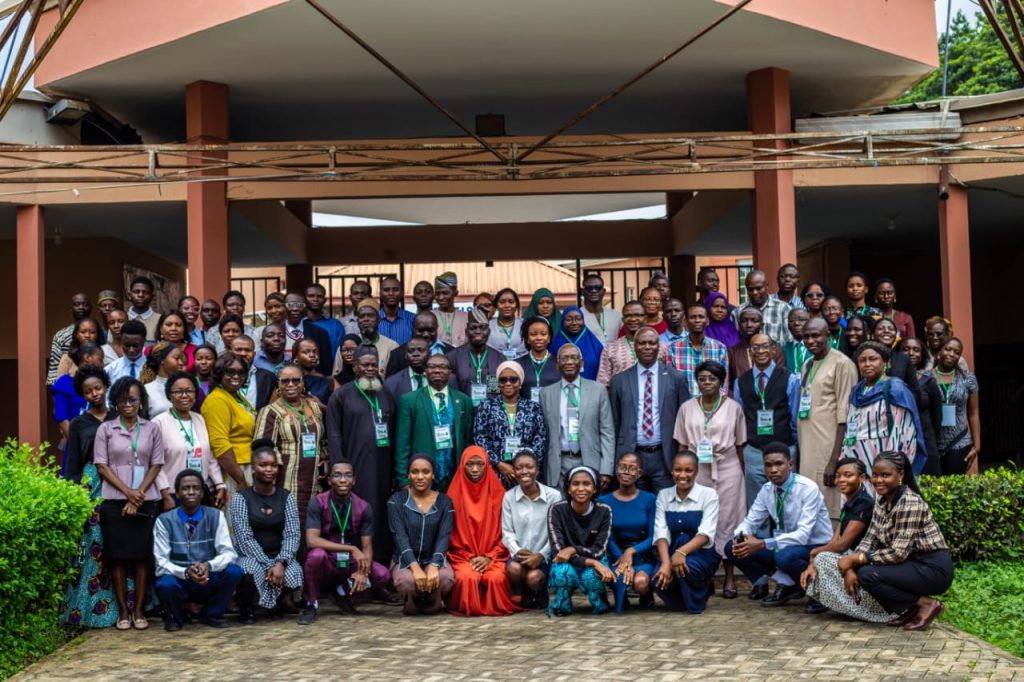
The commitment was highlighted at the National Symposium of the Society of Essential Oil Distillers and Analysts (SEODA), themed “Unlocking the Essential Oils Value Chain in Nigeria: Production and Commercialization for Sustainable Economic Growth.”
Representing the Honourable Minister of Innovation, Science and Technology, Dr. Kingsley Tochukwu Udeh, SAN, at the event was the Acting Director-General/Registrar/Chief Executive Officer of the Nigerian Institute of Science Laboratory Technology (NISLT), Dr. Peter Adefisoye Oluwafisoye, FISLT, mnip.
In the keynote presentation, titled “Global Trends and Opportunities in Essential Oil Production and Trade,” the Minister described the sector as an important avenue for converting Nigeria’s rich biological and agricultural resources into high-value products, while generating employment, strengthening rural economies, supporting industrialisation and expanding the country’s presence in international markets.
Harnessing Nigeria’s Plant Resources
The Minister noted that Nigeria has several advantages that could support the development of a thriving essential oils industry. These include its diverse ecological zones, extensive agricultural resources, indigenous knowledge, large labour force, expanding domestic market and growing pharmaceutical, cosmetics and entrepreneurial sectors.
He identified aromatic and medicinal plants such as lemongrass, ginger, citrus, eucalyptus, peppermint, frankincense, vetiver, neem, basil, mint and rosemary as important resources with potential for essential oil production and downstream applications.
However, he stressed that the abundance of raw materials alone would not guarantee economic success.
According to him, Nigeria must develop an integrated value chain covering cultivation, harvesting, extraction, purification, chemical characterization, quality control, packaging, branding, product development, commercialisation and export.
The Minister identified seven major opportunities available to Nigeria through the essential oils value chain: agricultural diversification, rural industrialisation, youth and women entrepreneurship, research commercialisation, import substitution, export diversification, and the development of biotechnology and other bio-based industries.
Research and Innovation as Drivers of Growth
The call for stronger research and innovation was further reinforced by Professor Olusegun Ekundayo, FAS, a retired Professor of Phytochemistry and Organic Chemistry at the University of Ibadan and a foremost researcher in essential oils in Nigeria.
Delivering the first plenary lecture, titled “Research, Innovation and Human Capacity Development for Advancing Nigeria’s Essential Oil Industry,” Professor Ekundayo explained that essential oils have been used for centuries in healthcare, preservation, cosmetics, spirituality and commerce.
He noted that renewed scientific interest in these natural products has expanded their potential applications across pharmaceuticals, cosmetics, food and beverages, agriculture, aromatherapy and other industries.
Essential oils, he explained, are highly concentrated volatile compounds obtained from different parts of plants, including leaves, flowers, bark, roots, fruits and seeds. Their biological properties may include antimicrobial, antioxidant, anti-inflammatory, analgesic and insecticidal activities.
Professor Ekundayo maintained that the increasing global demand for natural and environmentally friendly products presents Nigeria with considerable opportunities to expand research, innovation and industrial production in the sector.
He stressed that essential oils research requires collaboration across several disciplines, including chemistry, pharmacology, microbiology, agriculture, food science and environmental science.
He also advocated greater integration of indigenous knowledge with modern scientific research, noting that scientifically validating traditional knowledge could help preserve cultural heritage while opening new economic opportunities for communities.
Quality Assurance Essential for Global Competitiveness
Both the Minister and Professor Ekundayo emphasised that Nigeria’s ability to compete internationally would depend heavily on the quality, safety, consistency and authenticity of its essential oil products.
The Minister explained that factors such as plant variety, geographical location, soil and climate, cultivation practices, harvesting period, processing methods, extraction technology and storage conditions can influence the chemical composition and quality of essential oils.
He identified gas chromatography (GC), gas chromatography-mass spectrometry (GC-MS) and infrared spectroscopy among the analytical technologies required to establish chemical profiles, verify product authenticity and detect adulteration.
He stressed that Nigeria would struggle to become a major exporter if locally produced essential oils could not consistently satisfy the analytical and quality specifications demanded by international buyers.
Professor Ekundayo similarly identified standardisation, quality assurance, safety, sustainability and inadequate research funding as major challenges facing the industry.
He called for the adoption of reliable analytical procedures, comprehensive toxicological studies and clinical research to establish the safety, efficacy, appropriate dosage and possible interactions associated with essential oil products.
The Professor also warned against excessive dependence on wild harvesting, urging stakeholders to embrace sustainable cultivation, responsible harvesting, biodiversity conservation and environmentally friendly extraction technologies.
Bridging the Gap Between Research and Industry
The symposium placed significant emphasis on the need to move Nigerian essential oils research beyond academic publications and into commercially viable products and enterprises.
The Minister encouraged universities and research institutions to establish stronger relationships with industry through industry-sponsored research, contract research, technology licensing, incubation programmes and commercialisation partnerships.
He also urged investors to explore opportunities across the wider value chain, including crop cultivation, distillation, extraction technologies, analytical laboratories, packaging, cosmetics, pharmaceuticals, food flavouring, fragrances, biotechnology, logistics, digital traceability and export marketing.
To strengthen the connection between research and commercial production, the Minister proposed strategic collaboration between SEODA and the Federal Ministry of Innovation, Science and Technology in areas such as developing a National Aromatic Plants Mapping Matrix, establishing standardised production protocols and strengthening industry-academia partnerships.
He further encouraged the establishment of a Nigerian Essential Oils Industry Cluster that would bring together producers, distillers, laboratories, universities, research institutions, technology providers, investors, regulators and exporters.
Such a platform, he explained, could facilitate shared processing and analytical facilities, research and development, training, technology transfer, certification, market intelligence, export promotion and investment mobilisation.
Proposed National Framework for the Industry
Professor Ekundayo also advocated the development of a National Essential Oils Development Policy to provide a coordinated framework for research, investment, production, regulation, quality assurance and export promotion.
He proposed the establishment of a National Centre for Essential Oils Research and Innovation to serve as a hub for multidisciplinary research, technology development, product formulation, pilot-scale processing, quality assurance and collaboration between academia, research institutes and industry.
He called for greater investment in research and development through competitive grants, industry-led research, patent development, pilot production facilities, technology transfer and commercialisation of research outputs.
The essential oils expert further recommended specialised training in aromatic plant cultivation, modern distillation techniques, analytical chemistry, quality assurance, product development, entrepreneurship and international marketing.
He urged government to support farmers, processors, entrepreneurs and youth-led businesses with access to affordable finance while encouraging investment in modern distillation facilities, extraction laboratories, cosmetic manufacturing, pharmaceutical ingredient production, and fragrance and flavour industries.
According to him, emerging technologies such as artificial intelligence, metabolomics, biotechnology, nanotechnology, precision agriculture and advanced extraction methods could significantly transform essential oils research and production in Nigeria.
SEODA Advocates Stronger Collaboration
In her welcome address, the Chairperson of SEODA, Professor Sherifat Adehyinka Aboaba, described the symposium as an important step towards positioning Nigeria as a significant participant in the global essential oils industry.
She disclosed that SEODA was established in 2019 and had produced the first Compendium of Essential Oil Research in Nigeria, containing more than 400 abstracts from 20 contributors. The publication, she said, was intended to provide a valuable research resource for students, academics and industry practitioners.
Professor Aboaba observed that Nigeria’s abundance of aromatic and medicinal plants presents significant opportunities for economic development. She, however, lamented that the country’s participation in the global essential oils market remained modest despite its rich biodiversity, with many resources either underutilised or exported with little value addition.
She said the symposium was designed to facilitate knowledge exchange, policy dialogue, professional networking and collaboration among stakeholders across the value chain.
The event also featured a second plenary lecture by Professor Razak Shoremekun, Programme Officer at the National Board for Technical Education (NBTE), who represented the Executive Secretary of NBTE, Professor Idris Muhammed Bugaje. His presentation focused on “Policy, Regulation and Institutional Support for Building a Competitive Essential Oil Economy in Nigeria.”
The third plenary lecture, “From Farm to Global Market: Industrial Strategies for Scaling Essential Oils Production and Commercialization in Nigeria,” was delivered by Mr. Abayomi Lambo, Chief Executive Officer of Scent Designs Limited.
The Chairman of the Local Organising Committee, Professor Dorcas O. Moronkola, commended participants and members of the committee for their contributions to the success of the symposium and highlighted SEODA’s role in promoting research, knowledge sharing, professional development and industry collaboration.
Building a Globally Recognised Nigerian Industry
The Federal Government identified stronger collaboration among government agencies, universities, research institutions, laboratories, standards organisations, regulators, farmers, processors, exporters and investors as essential to building a competitive industry.
The Ministry also outlined key intervention areas, including research and development, analytical standardisation, technological adaptation and local fabrication, quality assurance and international certification, as well as incubation and commercial clusters.
The Minister encouraged SEODA to play a leading role in coordinating stakeholders and advancing the development of the industry.
He emphasised that Nigeria possesses the natural resources, human capacity and market potential required to establish a successful essential oils sector, but that deliberate action was needed to convert those advantages into economic value.
A major highlight of the symposium was the presentation of an Award of Recognition to the Honourable Minister of Innovation, Science and Technology by SEODA. The award was received on his behalf by Dr. Oluwafisoye.
The event also witnessed the induction of new Fellows of SEODA, further reflecting the Society’s commitment to professional development and the advancement of essential oils research and practice.
In his concluding message, the Minister reaffirmed the Federal Ministry of Innovation, Science and Technology’s readiness to work with SEODA and other stakeholders to accelerate investment, innovation, standardisation, commercialisation and export development.
The symposium ultimately underscored a shared national objective: to move Nigeria’s essential oils sector from largely untapped biological resources and fragmented production towards a coordinated, science-based and commercially driven industry capable of creating jobs, supporting rural livelihoods, stimulating industrial growth and securing a stronger position for Nigeria in the global market.